October 5-7, 2021 | Hybrid Conference
Live Attendance at MGM Grand, Detroit & Virtual Attendance Globally
ACCELERATING STRONGER TOGETHER


Thank you for joining us
This year’s Automotive Logistics and Supply Chain Live conference saw a welcome return of delegates to Detroit, while others attended online, to discuss how the industry was coping with the continued disruption affecting inbound and outbound supply.
The semiconductor shortage continues to affect production but there were hopeful signs that the problem could bottom out by the end of the year. However, continued high demand and the deficit of finished vehicle inventory means it is going to take a lot longer to return to the 90-days of supply that previously typified the industry in the region and there was speculation that the US might never return to that level.
What was clear from discussions across the two days of this year was that post-pandemic challenges to automotive production in North America, and globally, had put brought the hidden world of supply chain and logistics organisation into the limelight and made it headline news.
At the same time, crisis management has necessitated the same level of scrutiny within the supply chain itself, something that has accelerated the application of digital tools and highlighted the need to ditch slower and less flexible legacy systems.
There is also a more urgent need now for the industry to move toward a more sustainable model of production if the supply chain is to match the environmental goals of increased electric vehicle production in the decade ahead. As with the crisis management of current shortages, collaboration based on good quality data is key to the effort needed for greater sustainability and delegates discussed several initiatives already underway to improve a cleaner and more coordinated automotive supply chain.
All sessions are available to watch on the Automotive Logistics website.
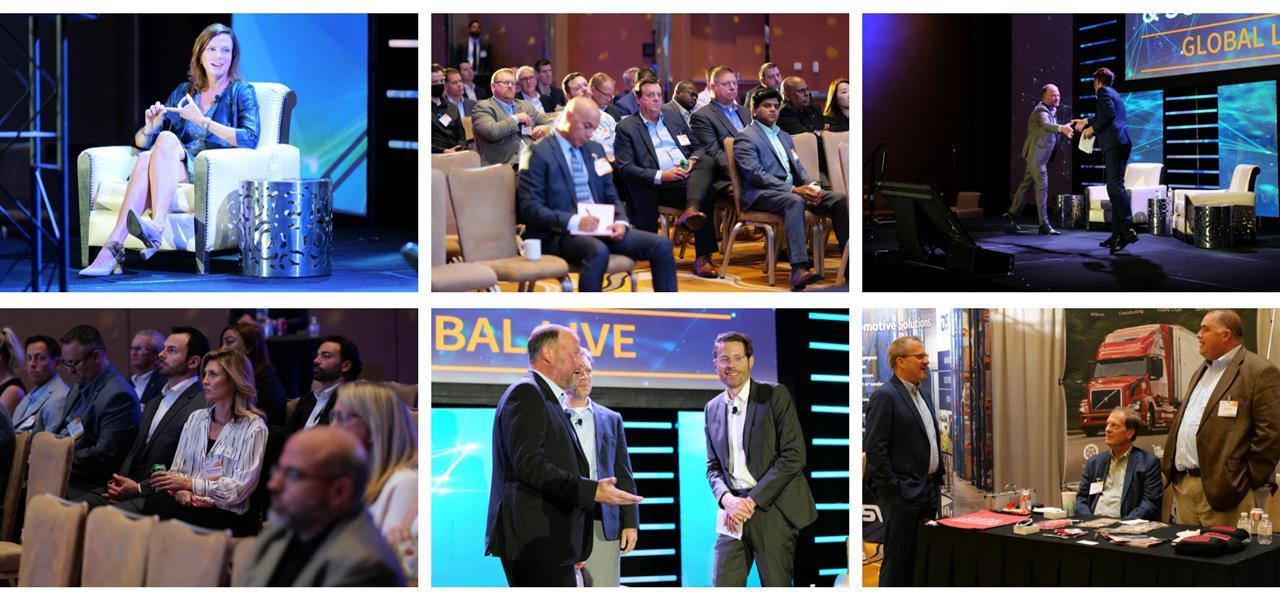
Photographs from the Conference
2021 Speakers
Informed and Inspired by Leaders and Innovators

Chris Styles
Vice-president Supply Chain Management, North America
Nissan
READ BIO
BIO
Chris Styles is vice president, supply chain management, North America. He was appointed to this position in March 2021. In this role, Styles is responsible for overseeing supply chain activities for all production parts and finished vehicle distribution in the U.S., Canada, and Mexico. Previously, Styles was senior director of supply chain logistics, Nissan U.S., where he was responsible for finished vehicle and inbound production parts logistics, supplier packaging engineering and logistics strategy for the U.S, Canada, and Mexico. Styles has worked as director of logistics for the U.S. and Canada in Nissan's supply chain management organization, director of purchasing for Nissan's Mexico operations, as well as director of purchasing for logistics and aftermarket and accessory parts for the Americas region.

Anu Goel
EVP - Group After Sales & Services
Volkswagen Group of America
READ BIO
BIO
Anu and the parts logistics team are responsible for the total supply chain management of service parts for Volkswagen Group of America (VWGoA), including product definition, cataloging, procurement, materials management, quality, dealer support, warehousing and transportation. Along with the vehicle logistics team, he is also responsible for activities (including port operations) supporting the distribution of finished vehicles in the US. Prior to working with Volkswagen, Anu spent over three years with Case New Holland (Fiat Group), most recently as as Vice-President, North and South American Parts Operations; and 23 years with Ford, where he served most recently as Director, Global Parts Supply and Logistics.

Kelly Bysouth
Chief Supply Chain Officer
IAC Group
READ BIO
BIO
Kelly Bysouth is Chief Supply Chain Officer for International Automotive Components (IAC) Group. In this role, she has global responsibility and operational control for all aspects of the company’s procurement and supply chain activities. Bysouth has more than 25 years of automotive procurement and supply chain experience. Previously, she served as Vice President of Global Procurement and Supply Chain for Adient, a position she held since 2016. Among her many accomplishments, she is credited with building the first centralized Supply Chain function within the organization and delivering benchmark year-over-year cost savings.

Steve Brown
VP of Parts Supply Chain Planning
Toyota North America
READ BIO
BIO
Steve Brown is responsible for parts supply chain planning, which includes Toyota’s production parts and service parts supply chains across North America. He oversees teams responsible for central planning and coordination of parts logistics, route engineering, new model planning, IT systems and sustainability initiatives for logistics. He also works closely with service parts planning as part of Toyota’s integrated parts supply chain function. Steve has worked with Toyota for more than 30 years across assembly, production control and logistics. He is based at Toyota’s North American headquarters in Plano, Texas.

George Grahovac
Department Lead - Supply Chain Delivery
Honda Development and Manufacturing of America
READ BIO
BIO
George leads the teams that manage the delivery of parts to and from the NA network of 950+ suppliers and the US Domestic Transportation Network. In the past he has also managed the import and distribution of parts from five global regions, the consolidation and export of parts to ten global production hubs, and the management of several supply chain supporting functions. He has been at Honda for 32 years, serving in various supply chain management capacities including assignments within the US, Mexico and Japan. He is passionate about supply chain management and driving greater supply chain efficiency and effectiveness through technology, human relations, and business acumen. He has a degree in industrial engineering and further business education from the Ohio State University Fisher School of Business.
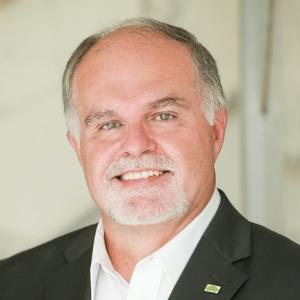
Kevin Butt
Senior Director, Environmental Sustainability
Toyota Motor North America
READ BIO
BIO
Mr. Kevin Butt is the Senior Director of Environmental Sustainability for Toyota’s North American Environmental Sustainability Programs. He is responsible for the development of Environmental Sustainability Programs and related Regulatory/Legislative development for all of Toyota’s North American operations. Mr. Butt serves on several boards including the National Wildlife Habitat Council (Past Chair), Kentucky Fish and Wildlife Foundation, World Wildlife Fund National Council, North American Great Plains Advisory Board, Yellowstone Park’s Yellowstone Forever Board (Chairman), National Environmental Education Foundation (Vice Chair) and the Pollinator Partnership Board, Supplier Partnership for the Environment (Chairman).
2021 tracks: Accelerating Together

Freight Network Management
READ MORE
In an era of record-high rates, continuous disruption and limited capacity, freight management has become more demanding than ever. OEMs, tier suppliers and 3PLs are using technology and collaborating more to optimise networks across transport modes to mitigate volatility and build more resilient logistics and production systems. Solutions to streamline freight consolidation, reduce lead times, improve capacity utilisation, reduce emissions and control costs will be crucial for success both in the aftermath of the pandemic and in the long term.

Electric Vehicle & Battery Supply Chains
READ MORE
As EV sales accelerate, both existing and start-up automakers are racing to forge partnerships and adapt supply chains to the complex requirements of manufacturing and transporting lithium-ion batteries and componenets, as well as managing heavier weights and new dimensions for finished electric vehicles. Supply chain stakeholders need to keep pace with the changes and developments of EV and battery technology, packaging and transport standards, along with infrastructure requirements and investments.

Digitalisation & Logistics IT
READ MORE
Manufacturers and providers are increasingly digitalising automotive logistics, putting data at the heart of connected factories and supply chain ecosystems. Asset tracking systems allow for real-time visibility, while technologies such as AI and digital twins are shifting decision making from reactive to predictive. It will be essential to select the right partners and invest in the right technology, as well as to integrate new tools into a myriad of platforms and legacy systems.

Sustainable Supply Chains
READ MORE
Governments and OEMs are putting in place roadmaps for zero-emission mobility, however, now is also the time to take action on shaping net carbon zero supply chains and logistics. Manufacturers and service providers must work together both on low-hanging fruit, such as agreeing standards for measuring emissions and reducing empty miles, as well as investing in areas of long-term gain, such as sustainable materials, greener transport technology, alternative fuels and closed-loop recycling. That will be the only way to achieve ambitious but necessary environmental targets.

Packaging & Material Flow
READ MORE
With multiple touchpoints throughout the supply chain, using the most optimal packaging and material handling solutions can significantly reduce waste, cost and emissions, whilst improving cycle times in plants and warehouses. Packaging engineering and returnable container management are at the heart of efficient supply chains. Advances in logistics automation, including AGVs, cobots, picking systems and autonomous transport equipment, can minimise down-time, reduce errors and mitigate labour shortages.

Strategic Supply Chain Management
READ MORE
Extremes in material shortages, freight rates, production disruption and low vehicle inventory levels are forcing supply chain leaders to challenge existing strategies and supply chain models. More stakeholders appreciate the value of accurate and updated forecasting, tier-N visibility and integrated sales and operations planning across manufacturing, logistics, purchasing and sales. Strategic supply chain management is increasingly at the intersection of all these departments, with responsibility for the systems, processes and data analysis to synchronise operations.
Our 2021 Partners
PREMIER
READ PROFILE
Ryder System, Inc. (NYSE: R) is a leading transportation and logistics company. It provides supply chain, dedicated transportation, and commercial fleet management solutions, including full service leasing, rental, and maintenance, used vehicle sales, professional drivers, transportation services, freight brokerage, warehousing and distribution, e-commerce fulfillment, and last mile delivery services, to some of the world’s most-recognized brands. Ryder manages more than 235,000 commercial vehicles and operates more than 300 warehouses encompassing approximately 63 million square feet.
INNOVATION
READ PROFILE
FreightVerify provides predictive, real-time transportation visibility at every step of the supply chain. Our shipper-centric platform addresses supply chain challenges for complex manufacturing operations through industry-defining intelligence. FreightVerify is trusted by the world’s top automotive manufacturers.
GOLD
READ PROFILE
When your expedited shipment needs to reach its destination fast, we do whatever it takes to make it happen. We are more than an international courier, we are your partner in emergency logistics. We understand your challenges and work tirelessly to find the perfect solution for every urgent shipment. Delivering customised, reliable and efficient NFO (next flight out) and hand-carry solutions for time and mission-critical shipments from anywhere to everywhere in the world. Our focus is your business and we treat your shipments as our own – working around the clock to make sure they get to their destination on time.CNW is a major supplier in the Semiconductor and Automotive Industry. With global offices in the US, Mexico, Costa Rica, China, Hong Kong, Singapore, Japan, Vietnam, Malaysia, Philippines, Taiwan, Korea, Germany, France, Budapest, England, Ireland and Israel – plus an arsenal of loyal local logistics partners – CNW is ready to take on your logistic challenges.

READ PROFILE
Reusable packaging improves the flow of product all along the automotive supply chain, for significant optimization and long-term sustainability. For decades, ORBIS has led the conversion of reusable packaging in the automotive industry and today continues to manage vehicle launches with leading automotive OEMs and suppliers. ORBIS helps companies design packaging programs that streamline launches, protect products and cut transportation costs. From tote/pallet systems and bulk packaging to custom dunnage and fabricated rack solutions, ORBIS offers the most unbiased product selection in the industry. ORBIS experts facilitate a well-planned, collaborative approach to implementing reusable packaging across North America and Europe.

READ PROFILE
ICL is the leading provider of finished vehicle supply chain solutions in North America,
focusing on the unique needs of the automotive shipper. Their web-native solutions are designed from the customer’s perspective and optimised to meet the demands of the finished vehicle transport process. The collective knowledge and real-world experience of their management team and support staff are a force-multiplier for their customers. They are committed to continuous improvement, both in the capabilities of our solutions and in the support they provide to their customers and their logistics partners. ICL’s management solutions represent a combined effort with some of the world’s most successful automakers to develop a system capable of meeting all real-world logistical challenges. Their success is built on the needs of the automotive shipper. By partnering with OEMs, processors and transport providers, ICL helps move the industry forward.
READ PROFILE
Maersk is an integrated container logistics company that combines our supply chain infrastructure with the power of our people and technology to drive end-to-end innovation that accelerates our customers’ success. We ensure that your automotive logistics runs smoothly by making sure that your components reach your markets just-in-time, so that your customers’ assembly lines are never slowed. In turn, this helps you significantly improve your customer relationships and profit margins. Our people, technology and network are dedicated to working tirelessly so you can enjoy a happy flow of cargo – ALL THE WAY from sourcing to your customers’ doorsteps.
READ PROFILE
DSV, our reach is global, yet our presence is local and close to our customers. More than 76,000 employees in more than 90 countries work passionately to deliver a great customer experience with automotive grade end to end supply chain services. We are proactive in our customer dealings and work hard to retain customers while making it easy for our clients to do business with us. DSV has comprehensive experience with automotive supply chains, ranging from traditional internal combustion engine vehicles with global logistic setups or low volume premium vehicles. Whether you are one of the world’s top automakers, suppliers, a bespoke automotive company, a technology provider or just getting into the automotive industry, DSV has the horsepower to accelerate your company into the next generation of electrification and mobility supply chains with a fresh approach toward resiliency and flexibility.
READ PROFILE
Evolution Time Critical has been delivering the world’s finest premium and emergency logistics to the automotive industry since 2001. Their award-winning team is trusted by vehicle manufacturers and component suppliers worldwide. Their activities cover every part of the world, from developing countries with challenging infrastructures to the most sophisticated automotive manufacturing regions. Rigorous research provides access to creative solutions via highly specialist local partners while a combination of tenacity, detailed understanding of local issues, and expertise in all critical transport modes, ensures the fastest, most efficient progress at every stage. Many automotive companies integrate Evolution services with their lean supply chain strategies, developing contingency plans that will immediately resolve potential failures, so they are able to reduce cost and inventory with confidence. Evolution’s success in driving excellence in time critical logistics has received global recognition with prestigious awards from respected global benchmarking organisation Frost & Sullivan, and the Institute of Transport Management.
READ PROFILE
For three generations, the Carter family of companies has been evolving to meet the demands of an ever-more-connected world. What began as a modest, family-owned dealership in 1957 eventually developed into a trucking company and then into a public and globally owned logistics powerhouse with clients located worldwide. In addition to our external partnerships, Carter offers unparalleled shipping services. With over 800 power units and 1,600 trailers, Carter Express is a recognized expert in customs and border crossings for Canada and Mexico. Carter built its foundation in trucking but is now a high-tech, results-orientated supply chain company. Carter is dedicated to innovation and marries the latest technology and data with a large, asset-based operation in the US and Mexico. Carter’s experienced analyst team makes continuous improvement and shared solutions a way of life. This drives cost containment solutions for our customers, some of the largest manufacturing companies in the world.

READ PROFILE
Air Charter Service is an award-winning cargo charter specialist and with 27 offices across North America (New York, Chicago, Houston, Los Angeles, San Francisco, Atlanta, Miami and Toronto), South America, Europe, Africa, the CIS, the Middle East, Asia and Australia, we provide aircraft charter solutions worldwide. With a proud history of more than 30 years, the company arranges 23,000 charter flights a year, with revenue of US$1.2 billion in 2020. As a world leader in the industry, ACS has been voted Cargo Charter Broker of the Year by Air Cargo Week readers for the past nine years in a row. ACS has been providing time critical charter solutions for more than 30 years and we work extensively with the automotive logistics industry, especially in North America and Europe. We are able to charter a variety of aircraft types, including helicopters, private jets, commercial airliners and cargo aircraft.
READ PROFILE
D-Troy Logistics is an asset-based carrier based in Dallas, TX specialized in door-to-door International Operations (USA-Canada-Mexico). D-Troy’s founding mission is to provide a value-added transportation service to increase security and reduce shipment lead times by eliminating cross-border transloading.
D-Troy is uniquely positioned to operate throughout the Northern Hemisphere and its strategic alliance with the Mexican carrier Transportes Logisticos Especializados (TLE) provides D-Troy with greater market access in Central and Southern Mexico. As a C-TPAT certified company, prioritizing Safety and Security, over 25 years of experience in the cross-border logistics market and over 120 tractors in their fleet, D-Troy Logistics holds a significant advantage over the competition. Respect and commitment to the safety and security of their drivers and the motoring public within Mexico and US, is at the core of their culture and embodies the D-Troy Advantage.
READ PROFILE
Kuehne + Nagel creates value through its leading solutions, industry expertise, powerful technology and extensive global network. Our services include finished vehicle, lithium battery, inbound & outbound and production logistics, as well as aftersales services, packaging services, tire logistics and reverse logistics. Kuehne + Nagel logistics experts understand the requirements of the automotive industry and develop solutions tailored to customers’ businesses. We are proud to be working with some of the world's well-known automotive manufacturers and suppliers. Our global logistics network includes over 1,300 offices and distribution facilities in 100 countries, staffed by dedicated teams with local knowledge and processes in place. This includes customs brokerage teams to ensure cargo clears customs in the most cost-efficient way. Kuehne + Nagel strives to provide maximum visibility, flexibility and information for its customers. Through our global digitalization tools, we offer on-line quoting and booking, track and trace, and powerful data to help customers make informed decisions.

READ PROFILE
For over 40 years, the Confezioni Andrea Group has produced transportation covers for all the main automotive, aeronautical and marine companies in the world, working side by side with R&D, quality and logistics departments as well as design centres. Our mission is to manufacture and guarantee a top-quality, cost-effective product range for the protection of vehicles in the logistics pipeline. Reducing damage by up to 95%, this represents the most complete and eco-friendly vehicle protection solution available. Thanks to our continuous evolution and focus on high quality standards, we are the benchmark for vehicle protection in the worldwide automotive market.
READ PROFILE
Coming soon...
MOBILE APP

READ PROFILE
Coming Soon...
SILVER

READ PROFILE
ProAct’s Enterprise Supply Chain Management software was developed to manage complex mission-critical business processes while supporting the adoption of new technologies such as digitalisation, autonomous vehicles, process automation and process learning. It manages VIN-level detail throughout the global multimodal plant-to-dealer supply chain along with sophisticated yard and compound operations, providing true ‘Control Tower’ flexibility and visibility across the entire supply chain.
READ PROFILE
From life-saving organs to essential machinery components, Airspace is trusted to move the most time-critical shipments on time, every time. The company’s proprietary AI-powered platform completely automates routing, dispatch, and delivery. Awarded and protected by multiple patents, Airspace technology provides unrivaled speed, reliability, and transparency in time-critical logistics. With its exclusive courier network, 24/7/365 support, and AirTrace™ tracking and reporting solution, the company is rapidly scaling into new markets and industries while continuing to innovate and maximize value for its customers.

READ PROFILE
CHEP is part of Brambles (ASX: BXB), a supply-chain logistics company operating in more than 60 countries, primarily through the CHEP and IFCO brands. The group specialises in the pooling of unit-load equipment and associated services, focusing on the outsourced management of pallets, crates and containers. Brambles employs more than 14,000 people and owns approximately 500m pallets, crates and containers through a global network of approximately 850 service centres. Brambles serves several industries including retail, aviation, oil and gas, and manufacturing. CHEP Automotive and Industrial Solutions is one of the dedicated divisions within Brambles, working with over 3,000 customers including the top OEM and tier one brands globally since 1975. With its environmentally friendly, cost-saving, multi-user shared container pooling service, CHEP reduces the total supply chain cost per part whilst improving the efficiency and carbon footprint of its customers.
READ PROFILE
Coming soon...

READ PROFILE
aThingz, is a global supply chain technology solutions company that provides business outcome focused solutions in areas of Logistics Planning, Demand Forecasting and Sensing, Logistics Cost to Serve and Supply Chain Resilience. We provide faster and timely integrated end to end supply chain business insights across the value chain, while transforming, innovating and providing sustainable cost savings, using proprietary algorithms, AI, machine learning, digital twins and optimization models. With our strong foundational data management and integrations features, we continuously improve the quality of data, thereby increasing the accuracy of supply chain business decisions.

READ PROFILE
Germany Trade & Invest (GTAI) is the economic development agency of the Federal Republic of Germany. With more than 50 offices in Germany and abroad, we see ourselves as facilitators who support German companies in their international business activities and foreign companies looking to locate to Germany.
READ PROFILE
project44 is the world's leading Advanced Visibility Platform for shippers and third-party logistics firms. project44 connects, automates, and provides visibility into key transportation processes to accelerate insights and shorten the time it takes to turn those insights into actions. Leveraging the power of the cloud-based project44 platform, organizations are able to increase operational efficiencies, reduce costs, improve shipping performance, and deliver an exceptional Amazon-like experience to their customers.
NET ZERO CARBON
READ PROFILE
Kuehne + Nagel creates value through its leading solutions, industry expertise, powerful technology and extensive global network. Our services include finished vehicle, lithium battery, inbound & outbound and production logistics, as well as aftersales services, packaging services, tire logistics and reverse logistics. Kuehne + Nagel logistics experts understand the requirements of the automotive industry and develop solutions tailored to customers’ businesses. We are proud to be working with some of the world's well-known automotive manufacturers and suppliers. Our global logistics network includes over 1,300 offices and distribution facilities in 100 countries, staffed by dedicated teams with local knowledge and processes in place. This includes customs brokerage teams to ensure cargo clears customs in the most cost-efficient way. Kuehne + Nagel strives to provide maximum visibility, flexibility and information for its customers. Through our global digitalization tools, we offer on-line quoting and booking, track and trace, and powerful data to help customers make informed decisions.
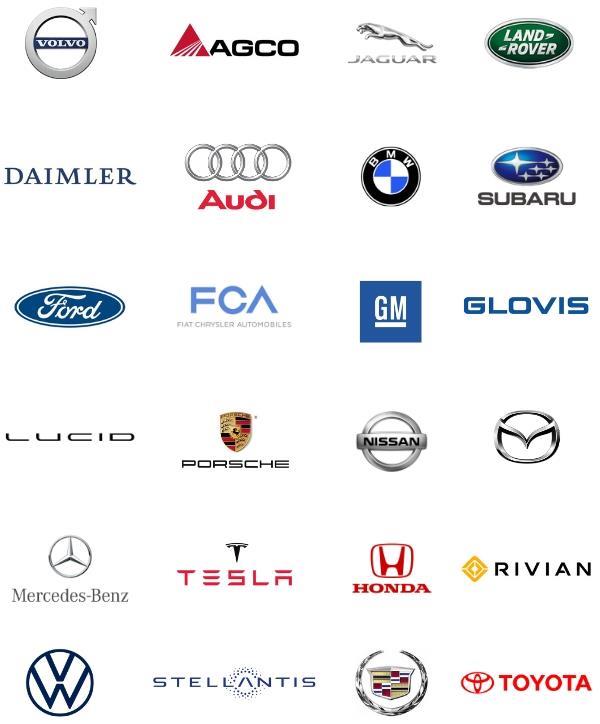
Previous Representatives
> President & Chief Executive Officer
> Chief Strategy Officer
> Chief Operations Officer
> Chief Technology Officer
> Vice President, Aftersales & Vehicle Logistics
> Senior Vice President, Logistics
> Vice President, Supply Chain
> Vice President, Finished Vehicle Logistics
> Director, Production North America
> Director, Purchasing
> Director, Global Customs & Trade Compliance
> Finished Vehicle Operations
> Port Director
> Import Export Manager